Friday, December 30, 2011

Die Weihnachtszeit in Deutschland. (Copied from Valpo Study Abroad Blog. Written: December 15, 2011)

**This is the very very last blog post copied and pasted from the VU Study Abroad blog. I'm currently working on an entry to be posted here within the next few hours!**


Hallo everyone! December has certainly been an adventurous month so far, and I have even more planned for the coming weeks!
If fall in Baden-Württemberg was Weinfest season, the last month or so has definitely brought about the beginning of Weihnachtsmarkt (Christmas Market) season. The Germans are very into their “Markts” (Markets), which feature all sorts of stands, booths, and tents with people food, crafts, and other Christmas decorations and presents of all varieties. Although I have yet to find something at a Christmas market that I actually need, they are very nice to walk through, and enjoy the atmosphere. There’s nothing much more German than walking around a Christmas market on a cold day with a mug of hot, spiced wine and some marzipan as accordion players perform in the background!
Esslingen
On Saturday, December 3rd I visited a “Mittelalterliche Weihnachtsmarkt” (Medieval Christmas Market) in the nearby town of Esslingen. The town itself was absolutely beautiful – very picturesque and stereotypically “European.” The market itself was giant – it seemed to consume every open space in the entire little town. In addition to the regular market taking place (with fruits, vegetables and other groceries, similar to the weekly markets in Tübingen), there was also a regular, non-medieval Christmas market, AND the medieval Christmas market. It was a little bit of a maze navigating through it all, but the people dressed up as pirates and other medieval characters unknown to me were a good indicator of which market we were passing through. I‘m not a giant fan of Renaissance fairs / Medieval-themed things (some people get really into it) but it was still really cool to walk through and see all the themes and everybody dressed up. I didn’t get a chance to learn much about the town itself, but I definitely plan on visiting again when I can get a clear view of everything!
Since we were nearly to Stuttgart and had already boughten a Baden-Württemberg day pass for the train, we decided to go all the way into the city and see the Christmas market there. It was much easier getting on a train out of Esslingen than taking a train to Esslingen, as the Medieval Christmas Market is quite well-known in the area, and draws quite the crowd! Stuttgart was beautiful as always, and very festive-looking for the Christmas season. It was frigidly cold, but shortly after arriving I bought myself a Glühwein to keep warm! At many of the Christmas markets here (and some other ones, for that matter) you can buy Glühwein in special mugs with the name of the city and Weihnachtsmarkt written on them. In Germany, you always have to pay a deposit for glass bottles, coffee mugs at markets, etc. but many people choose to keep their mugs and not return them for the deposit. I’ve started collecting the Christmas market mugs, because I think they‘re really practical souvenirs, and they‘re not that expensive ;) A mug of Glühwein in Stuttgart was €2.50, plus €2 Pfand (deposit.) So for €4.50, you can get some Glühwein and a souvenir mug for €2 cheaper than an empty souvenir mug from the Tourist Information Center in Tübingen. And, for someone like me who drinks coffee every day regardless of what country I‘m in, mugs serve a very useful purpose!
The Christmas Market in Stuttgart was probably my favorite one so far – but we didn’t end up staying long because of how cold it was. There was ice-skating, live music, plenty of food stands selling all sorts of traditional Christmas-season foods, and of course, all of the vendors selling Christmas Tree ornaments and everything else you could possibly decorate your house with for the season. It‘s really a shame that I don‘t go to Stuttgart more often – that‘s something I am going to change for the duration of my time here! It‘s so close, and there‘s so much to do there – it‘s just too bad that Stuttgart lies outside of the region where our student semester tickets for the busses/trains are valid. If I could go the whole way for free, I would spend much more time there for sure, since it‘s easy enough to get there.
Christmas Market in Strasbourg
Last Saturday, the 10th, I spent the day in Strasbourg, France on a day-trip organized by StudIT, the international student organization here at the Uni Tübingen. With the exception of having to wait for 45 minutes in the cold rain at 7:00 AM for the bus to arrive, it was a really great day. For €15, we were provided with transportation to and from Strasbourg, and a bus tour of the city. Strasbourg is an important city for the European Union, as the EU Parliament is based there, so it was really interesting to see all of the EU buildings etc. The bus tour took us through many interesting parts of the city, which was filled with so many different types of architecture, and I wish we would have had enough time to walk through everything we observed from the bus. After our tour, our tour guide took us through the city and showed us some different parts of the Weihnachtsmarkt that was going on there, and gave us (Jake, Hannah, Rachel, Emily, Me, and my French friend, Nathan) some tips on where to find a good restaurant. Much like Esslingen on an infinitely-larger scale, the city was engulfed in Weihnachtsmärkte – there were 12 separate Christmas Markets going on in nearly every open area of the city center. The market itself was much like the German ones, with a little bit of a French flair in terms of the food etc. being sold. Oh yeah, and because everything was written in French.
La Petite France

We were super lucky to have Nathan along to act as our translator, because although some of the vendors spoke German (because Strasbourg is directly on the border), many did not. AKA, we were complete idiots wandering through France. At lunch, he was nice enough to order for the five of us after translating the menu, as we clogged the line and surely annoyed everyone waiting behind us. It brought me back to my childhood memories of my family going through drive-throughs in our van. Nathan was like stressed-out parent speaking to the person at the other end of the microphone, trying to get all the orders right as all the kids in the back seat simultaneously screamed their detailed orders up to the front. Then of course, there‘s that moment when the car pulls away from the final window where you get your food, and after everything has been distributed and mom puts on the blinker to turn back onto the highway, someone realizes that they got the wrong order, or that something crucial is missing. That‘s what happened with my potatoes. So, Nathan dutifully left the table to return to the counter where he informed the employee that one of the stupid Americans didn’t get his potatoes. Problem solved. Merci beaucoup, monsieur.
After lunch, we walked to a very beautiful and well-known part of the city called “La Petit France” (The little France) before slowly making our way back to the bus and walking through the different markets. Like every European City, there was a giant church in the city center, where we poked inside to take a look and some pictures as well. We were surprised to see that there was a rockin‘ childrens‘ Nativity Program going on open to the public, with songs in English, German, and French. It was the most lively Christmas story I’ve ever seen. I’ve never heard christmas songs in church with so much bass – it was so cool I took a video. Overall, it was a great day in France, and now that I know a little more about the city, I hope to go back sometime in the Spring when it‘s a little warmer. Surprisingly to me, a lot of people actually complained about the trip, and although the organization was a little shaky at times, I really enjoyed it. For €15, I doubt you could take the train even halfway there, and we got to see a lot of interesting places over the six or so hours that we were there.
Disco Church! The most rockin' Christmas Pageant I've ever seen.

On Friday night, we got an email from Professor Malchow, Valpo‘s resident director in Reutlingen, about an opportunity to go to Bavaria on Sunday. Jake, Hannah and I decided to take advantage of the opportunity (poor Rachel was sick), and it turned out to be a really great day. For only €8 this time, we got the chance to tour the Dachau Concentration Camp, and see the city of Augsburg.
Concentration Camp visits are quite obviously, an extremely somber and depressing experience (I also toured Buchenwald as a high school student), but nonetheless part of an important chapter in history from which much can be learned. Although it‘s always a struggle for the Germans to deal with such a dark part of history, I think they do a great job openly acknowledging what happened and allowing everyone free access to the concentration camps (converted into museums) to learn about what went on there. None of us felt right about taking pictures, (although there were people who had pictures taken of them posing in front of the crematorium ovens) but I‘m sure I won‘t need any to remember the visit. It‘s a very powerful experience to walk through the barracks that were once overcrowded with people for whom every day was a struggle just to survive. Walking through the crematorium, gas chamber, and rooms where dead bodies were piled from floor to ceiling is an experience that can‘t really be put into words. It‘s truly sickening to see the cruelty of humanity in its worst form. Although unbelievably sad and depressing, I think it‘s important to see and learn about, and the displays throughout the camp and the main museum building are interesting, and well-presented. There are also audio-guides available (the only part of the self-guided tour that costs money) but ours didn’t seem to match up very well with the displays/areas of the camp.

Die Fuggerei

We spent the afternoon in the beautiful city of Augsburg, beginning with a tour of the “Fuggerei.” The Fuggerei was the first “low-income housing project” founded by in the year 1521 by a man named Jakob Fugger, or, “Jakob the rich.” At the time, he had roughly ten times the amount of money that Bill Gates does today (adjusted of course for inflation and what not). Jakob Fugger was a banker as well as a nobleman in the Holy Roman Empire, and wanted to do something for the community, many suspect, out of guilt for his vast wealth and/or other life mistakes etc. (That part wasn’t exactly clear to me!) Anyway, the entire neighborhood was beautiful, and perfectly taken care of. To this day, residents only pay 88 cents to live there for the entire year, but the list of applicants is always growing. True to the original tradition upon which the Fuggerei was founded, residents must be Catholic (it is required that they pray three times a day, and because there are prayers to the virgin Mary, Protestants cannot fulfill this requirement), live in Augsburg, and demonstrate need. Once residents are back on their feet again, it is expected that they move out and make the apartments available for others in their times of need. The Fuggerei is largely supported by tourist money, as people like ourselves tour the neighborhood daily. To keep everything looking visually attractive and well taken care of, no trash cans are permitted to be left outside the apartments – everything must be brought to a collection center. We were able to tour an apartment preserved in its original condition from the time the Fuggerei was built, as well as a modern apartment, which featured a bedroom, a kitchen, and a living room loaded with all of the modern conveniences and comforts of home. The ground-floor apartments all have their own gardens, and every apartment unit has its own door – which was a symbol of status and dignity in the 1500s. During the second world war, bombs meant to be dropped on the nearby Rathaus were carried by the wind in the direction of the Fuggerei, were a large portion of the housing development was destroyed. One person died in the bombing, but the rest were safe in the Fuggerei Bunker, which has since been converted into a museum. Shortly after, the damaged apartments were reconstructed, and today there is absolutely no indication that any part of the beautifully-kept Fuggerei was once in ruins.
Mozart's Grandpa lived in the Fuggerei!

After our tour, we ate an excellent Bavarian lunch in the Rathskeller before making our way toward the Weihnachtsmarkt. We stepped inside a church in the marketplace to have a look around, and then proceeded to climb to the top of the bell tower for a view of the city and the christmas market below

.
The Augsburger Weihnachtsmarkt from above.


The Augsburger Weihnachtsmarkt was one of my favorites that we have visited so far. The weather wasn’t too cold, the market wasn’t large enough to get lost in, every stand had something interesting to look at, and the christmas spirit felt by all was greatly enhanced with a cone of roasted nuts and a glühwein (which, once again, came in a really cool souvenir mug!) We didn’t have a ton of time to hang around, and after about an hour at the market we were back on the bus for the three-and-a-half hour ride back to Tübingen.
Beautiful Augsburg. From the bell tower.


This weekend is equally busy: Tomorrow, (on Friday) I am going to Nürnberg to see the city as well as the largest / most famous Christmas market in Germany. Saturday I‘m off to Zürich to explore the city a little, and to visit Switzerland for the first time, which I‘m very excited about!


The Augsburger Weihnachtsmarkt


This semester blogging for Valpo as a Study Abroad Representative has been great. Unfortunately, due to funding issues, I was not able to be granted a job for the second semester. If you are interested in continuing to read my blog posts / tweets, I will post the links below!
Thanks for reading, and bis dann!

Tuesday, December 13, 2011

GermanyZach is signing off!

Hey!

So, a couple hours later, and I have everything copied over from the Valpo blog. I'm sure it's horribly formatted – it would take forever to make it look perfect, so that's not happening ;)

I was actually going to work on this blog later and read Theology this afternoon... But that didn't happen either.

I'm about to write my last Valpo blog post, which means the next one will be written (and not copied) here! That also means I'm back to my own Twitter account, so I won't be tweeting as "GermanyZach" anymore ;)

Frankfurt, Sinterklaas, and Aufenthaltsgenehmigungen! (Copied from Valpo Study Abroad Blog. Written: November 27, 2011)


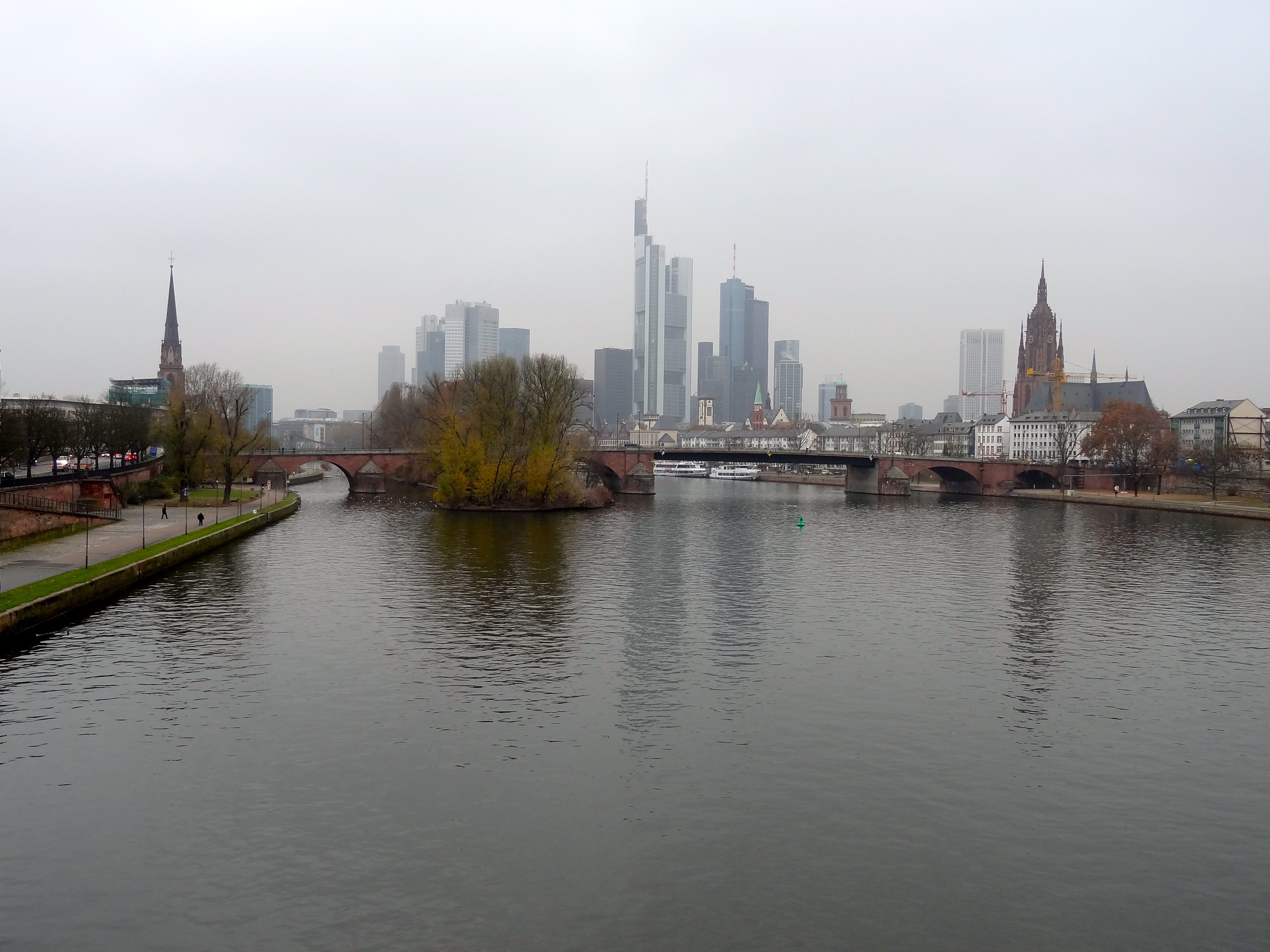
Last weekend I had the opportunity to spend a few days visiting a good friend in Frankfurt. Besides short layovers at the train station (one of the largest in Germany), I haven‘t gotten to spend much time in Frankfurt, although I got to know the city pretty well as an exchange student there in early 2009. Jamina (my German friend) was an exchange student at my high school in 2006-2007, and we‘ve kept in contact ever since. Frankfurt is a beautiful city – for a population of “only” roughly 650,000 (a smaller city, for American standards) it’s the only German city with a picturesque skyline full of skyscrapers. Such a cityscape is pretty unusual for Germany. Much like Chicago, Frankfurt is a business-city, specifically, a banking city. Just about every major European bank has an office there, most German banks are based there, it’s where the German Stock Exchange is located, and it is the banking center the European Union. Frankfurt is actually very safe city to visit despite having one of the highest crime rates in Europe. The reason for that statistic is because nearly all credit card fraud and identity theft that occurs in Germany is credited to Frankfurt, where the banks are based. The city itself features many museums, historic buildings (such as the birthplace Goethe), great shopping, excellent public transportation, as well as art, music, and theater.

Skyline - Frankfurt am Main (Frankfurt on the Main (River))


The Commerzbank Building - Frankfurt's "Sears Tower"


As a Medical Student, Jamina doesn’t have tons of time to spare, but I was grateful for the long weekend between her exams to visit! On Thursday directly after my classes I left for the train station, and made my way to Stuttgart. I was surprised to have found a train from Stuttgart to Frankfurt for €20 a couple days earlier, which in comparison to the other offers was significantly cheaper. I have a “Bahnkarte 50“ (a discount card for students through German Rail that allows me to pay half price for train travel), which makes the normal-priced tickets seem even more expensive.
**Note for future Tübingen study-abroad students: In my opinion, it‘s really worth it to invest in a Bahnkarte 50 ermäßigt. For €118, you pay half price on all train travel in Germany for the entire year. If you plan on going anywhere out of the immediate Tübingen area, you can really save a lot of money. Even going to Stuttgart, you can save a few euros each way, and if you take more than six train trips throughout the year at an average cost of €40 per round trip (before the reduction) the card will have already paid for itself. That figure is based on the average round trip to Frankfurt and back, (average as in good deal, but not out of the question) as I have lots of friends in the Frankfurt area. If you‘re planning on going further than an hour-and-a-half by train, you can save even more money. Lots of people like to buy the “Eurail“ passes, but in my opinion, it makes much more sense to buy the Bahnkarte 50. That way, you can save money by traveling by train within Germany, and if you want to travel internationally, you can always find cheap flights, thus saving lots of time and lots of money. Eurail passes are quite expensive, and although it‘s something of a European novelty to travel by train, it is not difficult to find good deals on airline tickets, which takes significantly less time. For example, last month we flew round trip to Vienna for €60, and the direct flight from Stuttgart took less than two hours. A train from Stuttgart to Vienna costs minimally €130, requires at least one transfer with layover, and requires minimally seven hours. And Austria borders Germany. Imagine going somewhere even further…**

Movie Night!


Anyway, after a short train trip and a tram ride to Jamina‘s apartment, I was treated to a great gluten-free dinner that she cooked for me before catching up on various aspects of life from the past three years, as well as watching a German movie. It‘s amazing how close you remain with good friends, regardless of how much time has passed. Jamina lives in a really cool apartment building near the Commerzbank Arena where the soccer team Eintracht Frankfurt plays. The building itself is actually intended for senior citizens who still live on their own, but because it is subsidized by the government for those living on fixed incomes, students are eligible to live there too. Walking down the hallways, you can tell whether you‘re passing a senior citizen‘s room or a student‘s room depending on whether a bicycle or a walker is sitting outside the door. I had to laugh to myself just a little bit, but the apartment itself was very luxurious compared to the living accommodations of the average American student, and nicer than my German dorm room too! Surprisingly, even though it has a living room, sleeping area, bathroom, and full kitchen, it was only a little more expensive than what I‘m paying per month in Tübingen. Plus, it‘s right on the tram line which makes getting to the city very accessible.

The "Hauptwache" = Trendy shopping district, which is in my opinion, the closest thing you'll find in Germany to Michigan Avenue. If you're an American mall store fan, you'll love it: this mall has one of the only Hollister stores in Germany. If you're into Euro style, this street is also home to five multi-story H&M stores. (Score!)


Although we didn’t have any big plans in particular, we did have the chance to do some shopping, check out the German Film Museum, see an open studio night at big artist studio building, walk through the city, and visit some places I enjoyed as an exchange student, including the European Union Central Bank where the Occupy Frankfurt protest was taking place. I’ve been reading a decent amount about the Occupy fill-in-the-blank protests, and it was interesting to see the one in Frankfurt. I had 5 hours to kill on Friday while Jamina was in class, so it was nice to just wander around a little bit and see how much of the city I remembered! And no visit to Frankfurt would be complete without a visit to a historic area of the city known as “Sachsenhausen” for a glass of Apple Wine, which we also crossed off the list.

The European Union Central Bank - Occupy Frankfurt Protest


Hhmm..... Not quite.


Every (German) protest needs a VW Microbus!


I returned from Frankfurt on Sunday night, and Monday evening we were invited to celebrate the Belgian “Sinterklaas” day, which normally takes place on November 6th. It is comparable to the German St. Nikolaus day that some people celebrate in the United States as well. One of our Belgian friends here, Helena, had a visit from her parents two weeks ago, who brought along the largest assortment of Belgian Sinterklaas day chocolate I’ve ever seen. (haha.) They had homemade hot chocolate and Belgian beer for us to sample, and the table was festively decorated. Each place was set with a couple of carefully-arranged Sinterklaas chocolates. They even had a couple extra-large chocolate Sinterklaases (like the chocolate bunnies we eat at Easter) that we broke into and shared amongst ourselves. At the end of the night we were all very full and couldn’t bring ourselves to look at another piece of chocolate, but they had so much left over that they joked about having a second Sinterklaas party this week. German chocolate is quite good, but just as the Europeans will tell you, Swiss and Belgian chocolate is top-quality. It totally puts Hersheys to shame.
According to the tradition, Sinterklaas lives in Spain, and comes to Belgium every November 6th on a ship loaded full of goodies for all the good Belgian children. (There are actually two variations of this holiday in Belgium: The Sinterklaas day on November 6th in one part of the country, and another gift-bearing figure who comes to children in the other half of the country a few weeks later. I’ve forgotten the exact details…) Sinterklaas is one of the sources of the American “Santa Claus“ tradition (hence the similarity between the names) and just like the American version, knows everything about every child. He even keeps a book in which he writes about the goodness or badness of every Belgian child in the half of the country for which he is responsible.
Sinterklaas Day! Complete with Belgian Chocolate of every variety!


My third adventure for this blog post regards a trip to the Bürgeramt (City Government Building) to visit the most unhappy, unfriendly, and blatantly-rude public workers in the entire Federal Republic of Germany. Much like the DMV, (or as it is known in Indiana, the BMV) the Bürgeramt is full of generally stressed-out and unhappy people, waiting for appointments requiring a library‘s worth of paperwork required for an important document of some sort that you can only hope to receive from somebody who is sick and tired of telling people all day long that they forgot to bring such and such necessary piece of paper. As of last week, I have now been in the European Union for three months, the maximum amount of time granted to tourists to remain in the country. Now that I am no longer officially a tourist, I needed to get a visa (Aufenthaltsgenehmigung) to stay for the rest of the year, and avoid imminent deportation.

Although I managed to bring all of the necessary documents along with my fee of €50, I forgot to convert my height to centimeters. When the woman asked me what my height was, I had no idea what to tell her, as I‘m pretty sure “Six feet, two inches“ would not have held much water on an application for a European visa. She rolled her eyes at me, scowled, and sighed angrily, as she threw her drawer open, pulled out an extendable ruler, and told me to stand against the wall. Out of fear, I complied as she measured me, wrote down my height in centimeters, and angrily slammed the drawer of her desk shut. With that, I was handed an information pamphlet and instructions for my next visit as soon as my visa arrives in the mail from Berlin. Mission Aufenthaltsgenehmigung: accomplished. Deportation avoided. As I walked out, I could hear the same employee shouting (really, shouting) at the people who were next in line. I must have gotten off easy.
That‘s all for this post! I hope everyone had a great Thanksgiving break back at home! Check out Jake‘s upcoming blog to read about our trip to the Ritter Sport Museum and the Thanksgiving dinner we hosted last night for our new international friends. (It must have been an accident, but we managed to pull everything together without burning/ruining anything!)
Bis dann,
Zach

University Life + Weekend Excursions. (Copied from Valpo Study Abroad Blog. Written: November 12, 2011)


Greetings from Tübingen! Sorry it’s been a while – I haven’t actually fallen off the face of the earth, regardless of how it may seem. In this blog, I’ll be writing about two recent weekend day trips right after a short summary of my life over the past few weeks!
Everything here has definitely been starting to settle down a little bit, with the start of the winter semester. It’s been a little difficult getting used to the German university system in that I have so much extra time. Or so it seems… At home, there is absolutely ALWAYS something to do when I’m at Valpo. Always a paper to write, a book to read, a presentation to practice, a quiz to study for, an assignment to complete, a meeting to attend etc. Here, my classes meet once a week (with the exception of Theology, which meets twice a week) as opposed to courses at Valpo, which usually require 3 or 4 class periods per week. While American universities practice “Continuous Assessment” throughout the course of the semester, German universities typically place most, if not all of the emphasis, on a final presentation and/or exam. In some of my classes here, the only grade I will receive all semester long is the final exam grade.
What does that mean? No homework! Or so I originally thought. What it really means is that I’ve got to get a move on, and get myself on track to learning tons of material. (I know, I sound like a giant slacker, but many of the German students I’ve talked to also haven’t done much yet this semester either… Which makes me feel better. I’ve just been allowing myself to experience the life of a typical German student by living a comfortable life of social events while getting to know people and places. Just for a few short weeks :)
There’s really nothing assigned that I have to do, but there are online articles, books, and other supplementary materials that may very well be required knowledge for the tests in February. Which means that over the past few days, I’ve been scrambling a little to get organized with my course materials and start the learning process of preparing for the final exams. Almost every course here has PDF files online containing all the necessary course information, which I spent a painstaking 1.5 hours as well as €15 printing out in the library last week. (You’d think that printing something would be as easy as clicking print, confirming the print job by clicking “OK,” walking to the nearest printer, and collecting your double-sided document. Not here. Such as simple, everyday task would be too easy for the Germans, who like to complicate things just a little too much sometimes. But I’m not complaining! Just a cultural difference, and me poking a little fun!)
Anyway, during a conversation with a German friend here who studied for one semester in Missouri, I was told that universities in America are “easier” than in Germany. I found that opinion to be interesting, but I simply could not agree. It is a wonder that I survived the courseload I had last semester at home – it was in no way easy! There is, however, some truth to his comment, in regards to how American students are expected to learn. In my opinion, the American university system has much more structure than that of Germany. Students are expected to keep up with the pace of the course, but they are also told what they need to learn by the given deadlines (more or less.) Such a system leaves no room for the “guessing game” of, “what will be important on the test, what does the professor find most valuable, and what do I need to learn?” that I feel I’m currently struggling to play. In many of my courses at home, the semester is broken up into thirds, with three large exams at the end of every section rather than one single exam at the end. The content isn’t easier, but it is helpful actually knowing what you have to learn and be responsible for. At the end of the day you’re still learning, you just don’t have to take a lucky stab in the dark at a semester’s worth of content. Just my opinion…
Anyway, on Tuesday of last week, I decided to join another class, after already missing the first two. I figured that I had the extra time in my weekly schedule to pick up another marketing class, so after a few emails back and forth with the professor, I was officially registered for “Industriegütermarketing” (Industrial Goods Marketing.) The only catch was that I have to give a presentation with two other people next Wednesday, during our first “Übung” period. (An übung is similar to a “lab” course at Valpo – the material covered coincides with what is being taught in the lectures, and during this period you are given the chance to work through and apply the content learned in class.)
For the presentation, I’ll be talking about a case study about an electric company in New York, and explaining why they did not get a bid to build electric motor components for a company in Ohio. At home, this would be an extremely interesting topic to me, as a business major. Here, although interesting, it’s pretty complex. The case study has quite a few characters and a complex sequence of events that’s not exactly easy to understand, much less present. I’ve already had to give a few presentations in my language courses but it’s much easier presenting to other international students who, much like myself, are still in the process of learning German and don’t yet speak it perfectly!
So, other than a little slap in the face by reality and some homework etc. I really haven’t been up to too many exciting ventures besides the two small trips I’m about to write about! Next weekend, I’m off to Frankfurt to visit one of my best friends who was an exchange student in my High School, and I may be going to Sweden at the end of next month, but that remains to be determined! I have a couple different options for how I’ll be spending Christmas, but I haven’t been able to decide yet between them!

And, we're off! Our group before hiking to the Würmlinger Kapelle (Chapel of Würmlingen)

On Saturday, October 29 a group of us hiked to a chapel (the Würmlinger Kapelle) right outside of nearby Würmlingen. (You may remember my post a few weeks back about our first failed attempt to hike there, but this time we knew the way!) Among our group were Rachel, Jake, and I from Valpo, a friend of Jake who was visiting from Spain, two friends from Deutsch Kompakt, and a couple French friends that I’ve met over the past few weeks. We started at 11:00 AM on the Neckarbrücke (the Neckar Bridge) and made our way through the castle, and down the path to the chapel.

The Würmlinger Kapelle, and the beautiful Fall colors

The hike took about two hours to finally reach the chapel, where we proceeded to look around for awhile, and visit the grave of a former supporter and financial contributor to Valpo’s German program who lived in Würmlingen. The chapel is 961 years old, and somewhat of a well-known landmark for this region. It has been honored over the years by many poets, including Ludwig Uhland of Tübingen.

Picnic, and nap in the grass!

See this link for the text of Uhland’s poem (in German): http://www.historisches-wuerttemberg.de/kultur/dichter/uhland/kapelle.htm
There were a couple steep ascents, but overall it wasn’t a bad hike. The chapel is on top of a large hill covered in small vineyards, and the view from the top was beautiful. We all brought picnics along, which we enjoyed at the bottom of the hill before taking a nap on the grass. For the end of October, the weather was nothing like what I would have expected at this time of year after having lived 20 years in the brutally-cold Midwest. It really felt like it could have been a month-and-a-half earlier. After another two-hour hike back, we were back in Tübingen. I can only speak for myself, but the 10k trek tired me out more than I expected it to. All in all, it was a great day, and a must-do day trip for everyone who studies in Tübingen or Reutlingen!
Weekend excursion number 2 was a trip to nearby Burg Hollenzollern, (Hollenzollern Castle), home of the royal family of Prussia. Although the country of Prussia was effectively dissolved by the Nazis in 1932 and officially ceased to exist in 1947, the castle remains one of several official residences of Georg Friedrich, the current prince of Prussia. I find it strange that there is still a royal, extremely-wealthy Prussian family. They have their own website: http://www.preussen.de/en/today.html. In a way, it must be pretty nice to be the prince of a non-existent country. You’re royal, loaded, and you have absolutely zero political power or work to do! You could finance your whole life with the interest of all the investments and bank accounts started by your historically-royal and powerful family. And you get to carry the title, “Prince of Prussia.” Sounds great to me!

Burg Hollenzollern (out the bus window)


The castle is the third to have stood atop the mountain in the Swabian Alb range (not to be confused with the Alps, which has a very similar sound in German). It was completed in 1867, which means that it is both relatively new and in very good condition in comparison to most castles in Germany. Burg Hollenzolern has a very fairy-tale-like appearance to it, and although it fits the image that comes to mind when most Americans hear the word, “Castle,” it’s really quite unique. Most castles in Germany are multiple hundreds of years old. They’re cold, impersonal, and in many cases, nothing more than archaeological ruins.
Jake, Hannah, and Rachel make the climb up to the castle from the bus stop


We had originally planned on taking the tour in English, as Jake’s friend visiting from Spain was still with us. After buying the ticket and standing in the extremely long line, we were nearly an hour late for the English tour. It was a very beautiful October day, and Burg Hollenzollern simply couldn’t accommodate all the tourists that wanted in on the 1:00 tour. So, 45 minutes later, our tour began in German. It was no problem for us, and translating everything into English was good practice.
Inside the castle courtyard


Photography was prohibited inside of the castle, so I unfortunately don’t have any pictures to post from inside. The tour was excellent, and it is also a must-see for any tourists to the area / students studying in Reutlingen or Tübingen.

Another view of the Burg Hollenzollern


The castle also has a Biergarten and an excellent restaurant, where we elected to have dinner. There were a few hardy people enjoying the food and beer in the biergarten, but by the time evening rolled around it was too cold for us outside! The restaurant featured all sorts of traditional Swabian foods, including my favorite variety of Potato Salad typical of Southwest Germany.
Check out this website for more information about Burg Hollenzollern: http://www.burg-hohenzollern.com/startpage.html.
That’s all for now!
Next blog post to come sometime next week about my upcoming trip to Frankfurt! Wish me luck this week in classes as I attempt to understand everything! The philosophy “Fake it until you make it,” has never had so much relevance in my life as it does right now ;)
Check out my album October 2011 in Tübingen + Vienna! to see all my pictures from the two day-trips described above! (They’re at the end of the album.)
https://picasaweb.google.com/117445044945979223598/October2011InTubingenVienna?authuser=0&feat=directlink
Bis dann!